
The outreach comes amid a drop in Indian student enrolments in management programmes at American universities last year, following changes to US student visa policies.

Holding Home Minister Amit Shah responsible for alleged police brutalities on protesting students, Leader of the Opposition in the Rajya Sabha Mallikarjun Kharge on Thursday said that "Jan Shakti" (people's power) will "drag him out" one day to make him accountable.

For millions of Indians, this number has become one of the most important financial indicators. It can influence not only whether a bank approves a loan but also the interest rate you pay, the credit limit you receive and, in some cases, how quickly your application is processed.

'Improved law and order and transparent governance have helped change UP's investment image.'

Beyond imprisonment, candidates caught cheating face cancellation of examination scores, blacklisting under China's social credit system and multi-year bans from appearing in state examinations.
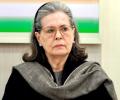
Noting that these three Cs haunt Indian education today, the Congress Parliamentary Party chairperson said in an article that this "carnage" of India's public education system must end.

The University Grants Commission's (UGC) new regulations on promoting equity in higher education institutions have sparked protests and legal challenges. This article explains the regulations, the concerns raised, and the government's response.

A good NEET score improves your chances of admission. But the counselling process ultimately determines which college and course you will join.

Mr Pradhan is not an especially charismatic leader or a brilliant orator, but his understanding of realpolitik and organisational dynamics makes him the ultimate party man, points out Aditi Phadnis.

'We're doing a lot of work around work-integrated learning, providing students with every opportunity to take at least part of their education as a practical work-based experience.'

The new UGC regulations mandating all higher education institutions to form "equity committees" to look into discrimination complaints and promote equity were notified on January 13.
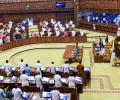
The Kerala Assembly passed a bill allowing for the establishment of private universities in the state. This marks a significant policy shift for the CPI(M)-led government, which had previously opposed privatization of education. The bill was passed by voice vote following discussions on Monday and Tuesday. The opposition raised concerns about the potential impact of private universities on public institutions and questioned the practicality of the requirements for starting a private university. However, the government defended the bill, stating it was a necessary step to improve higher education in Kerala and elevate public universities to global standards.

The Supreme Court has stayed a recent University Grants Commission (UGC) regulation following petitions arguing that the Commission's definition of caste-based discrimination was too narrow, excluding certain categories from institutional protection.

The Indian government informed Parliament that India and the US are engaged in negotiations for a mutually beneficial multi-sectoral bilateral trade agreement. The two countries also cooperate on strategic, economic, and defense matters, managing divergences through high-level dialogues.
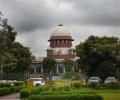
Three academics involved in drafting a controversial NCERT textbook chapter on corruption in the judiciary have approached the Supreme Court to defend their work, stating it was a collective effort and not the view of any single individual.

Steps will be taken to attract external commercial borrowing and FDI in the education sector, the finance minister said. Stating that govt will soon introduce new education policy, Sitharaman said online degree courses to students from weaker sections.

At least six major UK universities have announced plans to set up campuses or liaison offices in India.

Investors and startup executives are calling for extending the period for an entity to be recognised as a startup from 10 to 15 years for deep-tech companies.

'...the enormous responsibility and faith the youth has put on his shoulders, that he is going to solve their problems.'

Through his commitment to democratic norms, debate, dissent and constitutionalism, Jawaharlal Nehru helped ensure that parliamentary democracy took deep root in independent India. Utkarsh Mishra evaluates Nehru's 17 years as India's first prime minister, examining his role in nation-building, democratic institution-building, economic planning, scientific advancement and foreign policy.

In tackling India's unemployment problem, look beyond the finance minister and focus on the education minister, points out Gurbachan Singh.

In the last budget, then finance minister Arun Jaitley had allocated Rs 85,010 crore for the education sector which was later revised to Rs 83,625.86 crore.
Sitharaman said the government will bring in a new national education policy to transform India's higher education system into one of the best in the world.
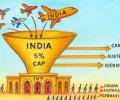
Trump's proposed policy limits undergraduates from any one country to 5% at select top US universities, raising concerns for Indian aspirants eyeing elite colleges.

If one has to compare the tenures of the two prime ministers one must credit Nehru with laying the foundations on which Modi is building a grand edifice, asserts Colonel Anil A Athale (retd).

The Supreme Court's stay on the UGC equity regulations aimed at preventing caste-based discrimination on campuses has been met with mixed reactions. Opposition parties welcomed the decision, while some expressed concern over the implications for marginalized communities.
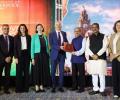
Initially, we will look to take a small batch of a few hundred students, with a plan to increase this to 5,000 students in the next five years, and eventually 10,000 by 2036.'

Uncertainty clouds US fall intake as Trump's visa ban on Harvard raises fears of wider policy shifts, pushing Indian students to explore alternative destinations.

Less than half of all graduates were employed, with 48.8 per cent reporting some form of work.

A new report indicates a decrease in international student enrolments in US colleges, but India remains the top source of international students.

Alankar Agnihotri, a 2019-batch Provincial Civil Service officer, resigned from service citing deep disagreement with government policies, especially the new UGC regulations.

In a world fractured by uncertainty, India stands out for its policy consistency, paired with sustained ambition, points out Pritam Banerjee.

'Our problem is not a budget deficit but a trust deficit. We need to trust our institutions and industries to innovate and lead. That is the way forward for India.'

The move came against the backdrop of Turkiye backing Pakistan and its condemnation of India's strikes on terror camps in the neighbouring country and Pakistan-occupied Kashmir under Operation Sindoor.

This was perhaps a missed opportunity for India to spotlight a core domestic challenge: The scale of workforce preparation required for a young, populous, rapidly growing country seeking to reach net zero, points out Radha Roy Biswas.

'India cannot speak of a demographic dividend if half its young women are unable to participate in paid work.'

At the Mumbai campus the institute will offer both UG and graduate degrees, most of its courses will focus on science, technology, engineering and mathematics.
Meanwhile, the Uttar Pradesh government has suspended Bareilly City Magistrate Alankar Agnihotri on charges of indiscipline after he resigned from service in protest against government policies.

With stricter policies dampening the US/UK dream, Germany, Ireland and New Zealand are emerges as new study abroad destinations for Indian students.

Addressing a summit in Varanasi on the implementation of the National Education Policy, Modi said the system should not just produce degree-holders but provide human resources needed to take the country forward.
